Inflation Impact: Energy Prices Reshaping Markets
Global Markets, Inflation Impact, Energy Prices
Inflation Impact: How High Energy Prices and Hidden Pressures Are Reshaping Global Markets
The August 2026 Producer Price Index (PPI) data from major economies such as the United States and China confirms what many businesses and investors already feel on the ground: inflation pressures, driven heavily by energy costs, are far from contained. At the same time, growing geopolitical tensions and increasingly opaque inflation reporting are making traditional safe assets like bonds and gold more volatile and less predictable, complicating decisions for a global market audience seeking investment stability.
Energy Prices as the New Inflation Engine for Businesses and Manufacturers
For producers worldwide, the inflation impact of energy costs has become impossible to ignore. Energy is embedded in almost every stage of the value chain: powering factories, fueling transportation, heating warehouses, and enabling data centers. When oil, natural gas, and electricity prices rise, the result is a broad-based increase in production costs that shows up first in PPI and only later in consumer prices.
In August 2026, U.S. PPI rose 5.4% year-over-year, up from 4.8% in July, according to the U.S. Bureau of Labor Statistics and Associated Press reporting. This acceleration in wholesale prices highlights persistent cost pressures at the producer level, much of which is tied to higher energy and transportation expenses. In China, the National Bureau of Statistics reported that PPI climbed 3.8% year-over-year in August, reversing a 0.7% decline in July and rising 0.4% month-on-month. The sharp swing underscores how quickly producer costs can rebound when energy and raw material prices turn higher.
For manufacturers, these numbers are not abstract. Higher diesel costs raise freight rates; elevated natural gas prices push up the cost of running kilns, smelters, and chemical plants; and electricity price spikes directly hit operating margins. Many businesses are caught between absorbing these costs, eroding profitability, or passing them on, which risks weakening demand and fueling further inflation at the consumer level. Either way, the inflation impact of energy is tightening the squeeze on corporate balance sheets and strategic planning worldwide.
PPI August 2026: A Warning Signal for Future Consumer Prices
The August 2026 PPI data in the U.S. and China is more than a snapshot; it is a forward-looking indicator for consumer prices. Historically, sustained increases in producer prices tend to filter through to retail prices with a lag, especially when driven by broad input categories like energy and transportation rather than isolated sectors. The U.S. PPI reading of 5.4% and China’s 3.8% year-over-year rise both suggest that pipeline pressures are building simultaneously in the world’s two largest economies.
While official U.S. CPI data for August 2026 has not yet been released, nowcasting estimates from the Federal Reserve Bank of Cleveland point to year-over-year inflation of around 3.38%, with core inflation closer to 2.38%. On the surface, this appears manageable. Yet when compared with the stronger PPI prints, it raises a key question for global investors and corporate leaders: Are consumer price measures fully capturing the inflation that is building in the production pipeline? If not, today’s relatively moderate CPI figures may understate the pressure that will emerge in coming quarters, especially if energy prices remain elevated or rise further.
Hidden Heat: How Official Inflation Numbers May Understate Real Pressures
Around the world, governments and statistical agencies face intense political pressure to demonstrate that inflation is “under control.” This creates incentives, subtle or otherwise, to adjust methodologies, emphasize certain indicators, or selectively highlight data that paints a more favourable picture. While outright falsification is rare in major economies, there are several ways in which real inflation could already be higher than headline numbers suggest:
Basket composition and weights: Consumer price indices rely on a basket of goods and services. If the basket underweights items with fast-rising prices, such as energy-intensive services or certain food categories, the official rate may lag behind lived experience.
Substitution effects: Many indices assume that consumers switch to cheaper alternatives when prices rise, which can mathematically dampen measured inflation even if households feel worse off.
Administered prices and subsidies: Some governments cap energy or transport tariffs, or introduce temporary subsidies. This can suppress official inflation while shifting costs to public budgets or future periods.
In emerging markets, data quality issues and political interference can further distort inflation readings. Even in advanced economies, methodological debates, such as how to treat housing costs, health care, or quality adjustments, can make official inflation appear tamer than what businesses and households report anecdotally. When producers are facing PPI increases above 5% while consumer inflation hovers near 3%, it is reasonable for market participants to suspect that some of the pressure has yet to fully surface in the headline statistics.
Geopolitical Tensions, Energy Markets, and Data Obscurity
The inflation story of 2026 cannot be separated from global geopolitical tensions. Conflicts and strategic rivalries involving major energy producers and transport corridors have repeatedly disrupted supply chains, pushed up freight rates, and heightened uncertainty about future supplies. Sanctions regimes, export controls, and sudden policy shifts have contributed to volatility in oil and gas markets, which in turn amplifies the inflation impact on producers and consumers alike.
At the same time, data transparency is deteriorating in several jurisdictions. Some countries have reduced the detail of their inflation releases, delayed publication, or changed methodologies with limited explanation. Others have restricted access to energy production and inventory data, making it harder for analysts to accurately gauge supply-demand balances. This obscurity in reporting increases the risk that markets are mispricing inflation and energy risks, as investors must rely more heavily on estimates, private surveys, and nowcasting models rather than consistent, high-quality official statistics.
📌 Key Takeaway: When geopolitical tensions and opaque data converge, inflation becomes harder to measure, forecast, and hedge, raising risk premia across global markets.
Investment Stability Under Strain: Bonds, Gold, and the New Inflation Reality
Traditionally, government bonds and gold have been core pillars of investment stability. Yet in an environment of persistent energy-driven inflation, questionable data quality, and shifting central bank strategies, both asset classes face new uncertainties.
Bonds: Upward Pressure and Duration Risk
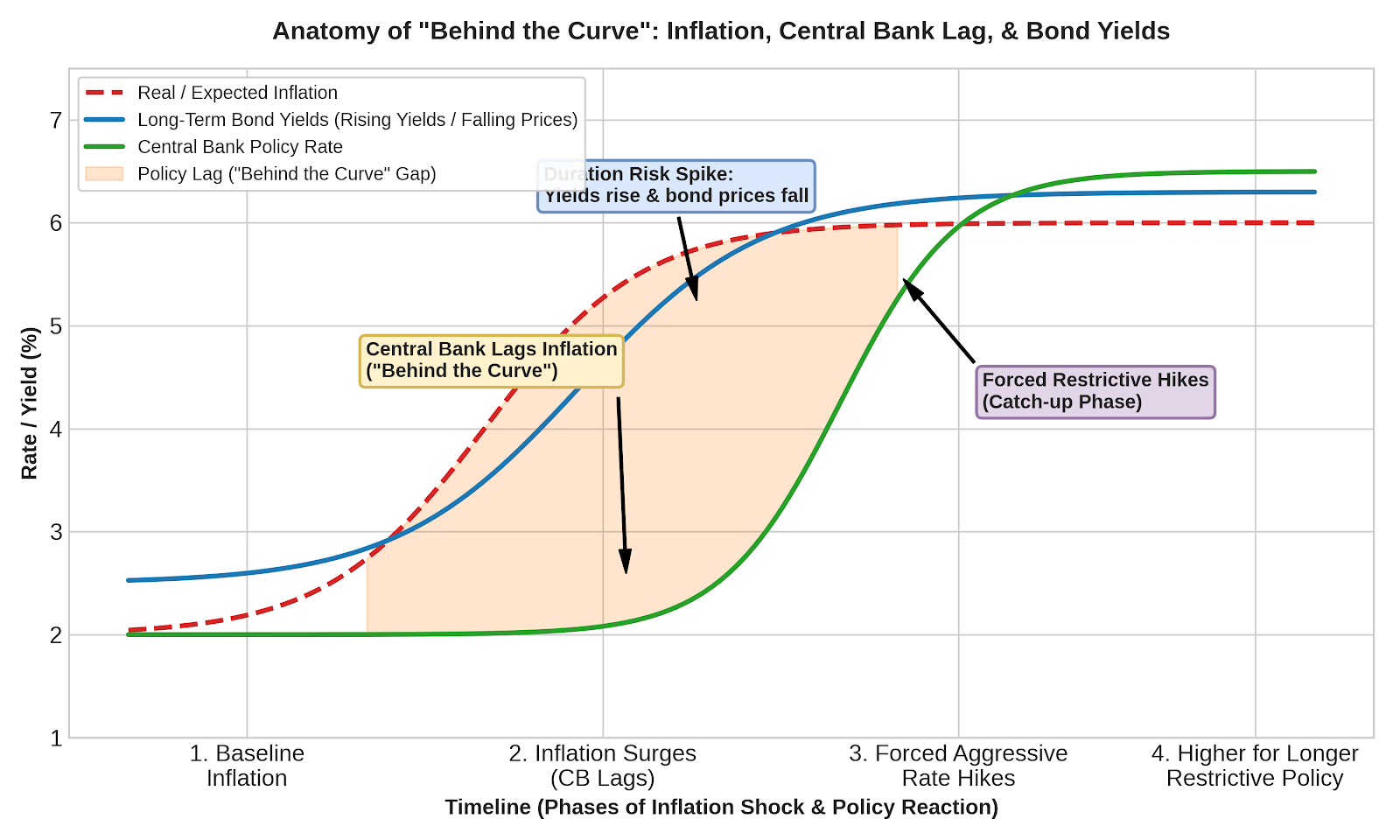
If PPI remains elevated and markets conclude that real inflation could already be higher than reported, central banks may be forced to keep policy rates restrictive for longer, or even tighten further. This scenario places ongoing upward pressure on bonds in the form of rising yields and falling prices. Long-duration government bonds, in particular, become vulnerable as investors demand higher compensation for inflation uncertainty and the risk that central banks are “behind the curve.”
For global fixed-income investors, the challenge is twofold. First, they must assess whether nominal yields adequately reflect the true inflation risk in each jurisdiction, given the potential manipulation or understatement of official CPI. Second, they need to evaluate how geopolitical shocks, such as disruptions in key energy-producing regions, could trigger sudden repricing of inflation expectations and policy paths. In this context, the traditional view of sovereign bonds as a low-volatility anchor is being tested, and duration management has become central to risk control.
Gold: A Hedge with New Volatility
Gold has long been regarded as a hedge against inflation and geopolitical risk. In theory, rising inflation and heightened tensions should support higher gold prices. However, the current environment complicates this relationship. When real yields on bonds rise because markets expect central banks to stay restrictive, gold can face headwinds despite elevated inflation, as the opportunity cost of holding a non-yielding asset increases. Meanwhile, shifts in central bank gold purchases, currency realignments, and capital controls in some markets add further layers of complexity.
The result is that both bonds and gold, once seen as clear defensive choices, now carry more nuanced risk profiles. For global portfolios, the search for investment stability increasingly involves diversified hedging strategies, including inflation-linked bonds where available, selective commodities exposure, and dynamic allocation that can respond quickly to new inflation and energy data.
Strategic Considerations for a Global Market Audience
For businesses, manufacturers, and investors operating across borders, the combination of high energy prices, rising PPI, and opaque inflation data calls for a more proactive and granular approach to risk management. A few practical implications stand out:
Scenario planning around energy costs: Companies should stress-test their cost structures under different energy price paths and consider hedging, efficiency investments, or supply diversification to mitigate shocks.
Independent inflation monitoring: Relying solely on official CPI may be insufficient. Incorporating PPI trends, private surveys, and market-based measures (such as breakeven inflation rates) can provide a more realistic picture of underlying pressures.
Active duration and currency management: With upward pressure on bonds remaining a risk, fixed-income portfolios may benefit from shorter duration, diversified issuers, and careful currency exposure aligned with inflation differentials.
Ultimately, the August 2026 PPI readings in the U.S. and China are not isolated statistics; they are part of a broader narrative in which energy prices, geopolitical tensions, and data opacity are reshaping how inflation is transmitted, measured, and priced. For a global market audience, recognizing these linkages is essential to navigating the next phase of the cycle, one in which traditional assumptions about inflation, consumer prices, and safe assets may no longer hold in the way they once did.